Some students are full of advice before they’ve even heard the problem. These B2 pairwork speaking activities make them find out a little more first. One student has a story to tell, while their partner asks questions before suggesting what to do.

Contents
Using B2 pairwork speaking activities
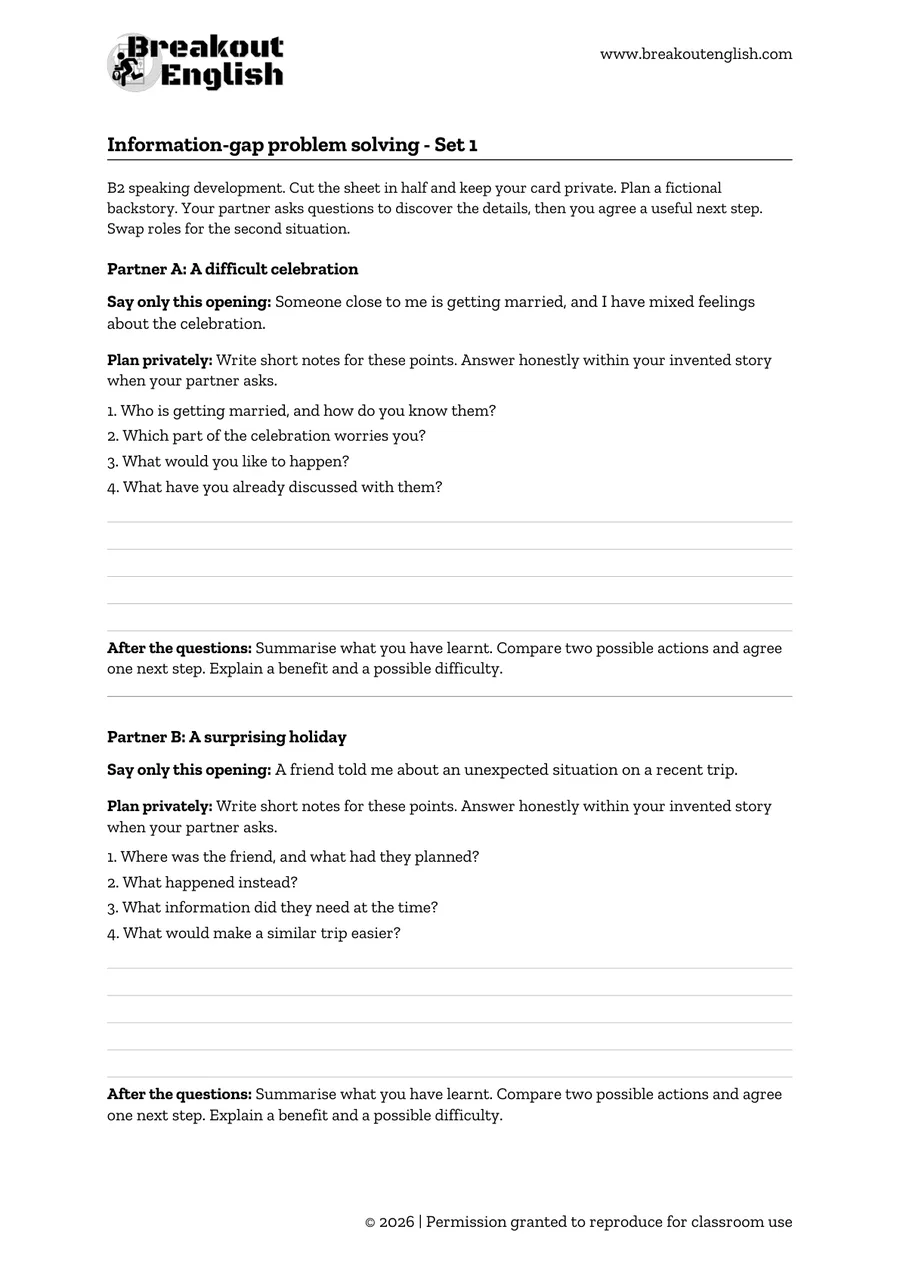
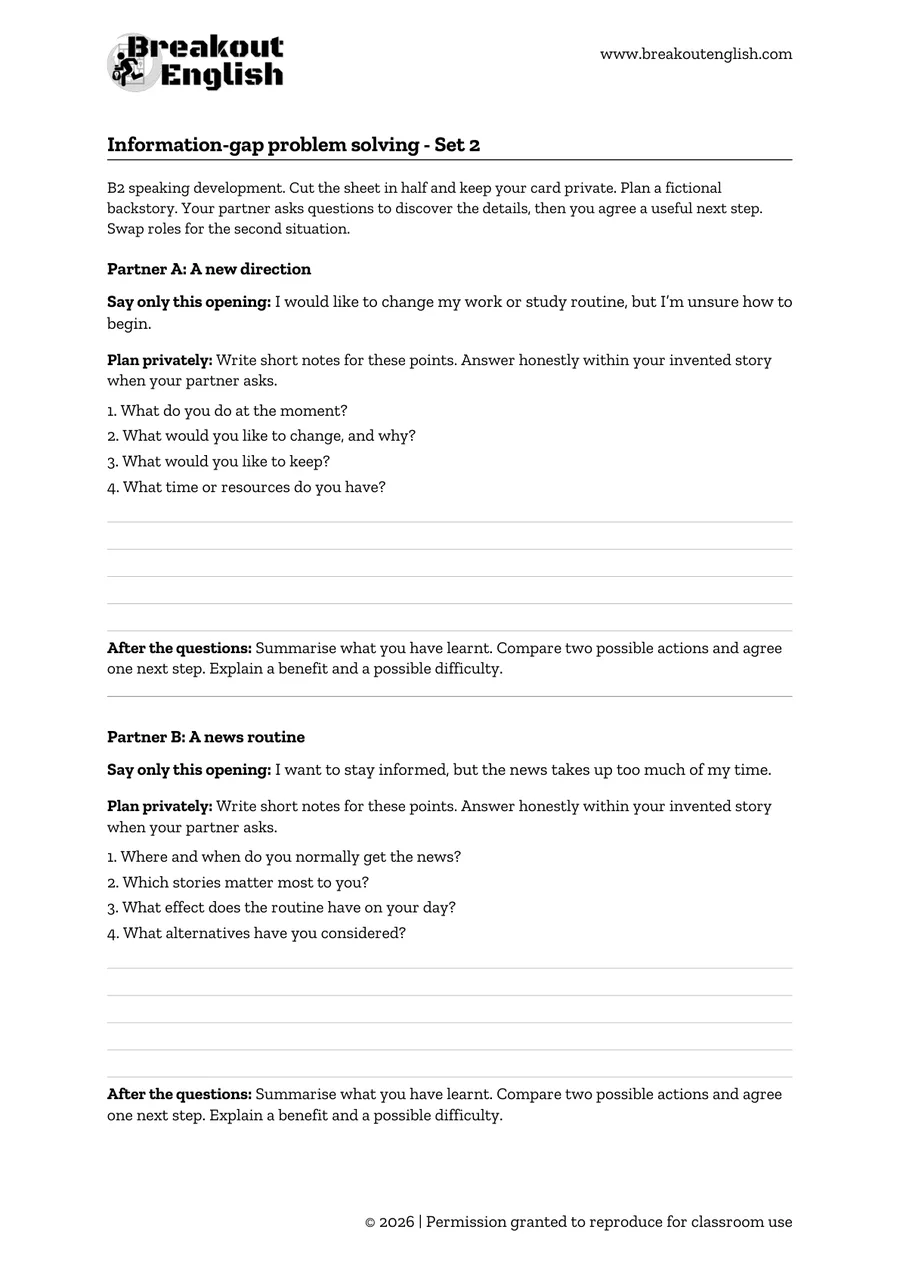
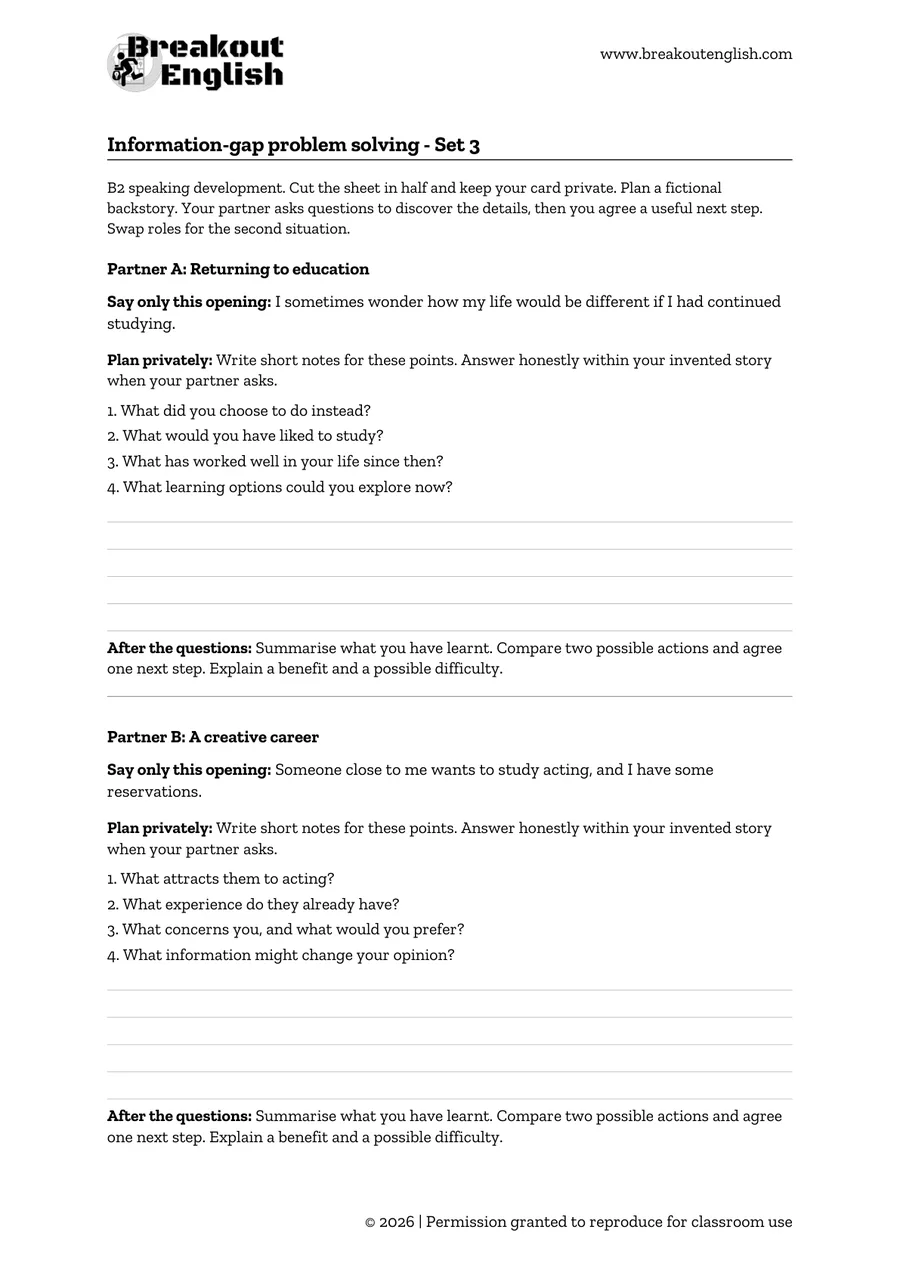
These are information-gap activities. Each student plans a fictional backstory using the questions on their card, then shares only the opening sentence. Their partner has to discover the rest through conversation. Keep those cards hidden!
For example, one scenario begins:
“I would like to change my work or study routine, but I’m unsure how to begin.”
“Find another job” might be good advice, but we don’t know enough yet. Model a short exchange to show students how one answer leads to another question:
- A: What would you like to change?
- B: The hours. I never get home before eight.
- A: Have you spoken to your manager about changing them?
Encourage students to follow the answers rather than work through a memorised list of questions. Otherwise, your conversation can start to sound suspiciously like an interview.
Once they understand the situation, partners compare two possible actions and agree on a next step. Ask them to explain a benefit and a possible difficulty with their choice. Then swap roles.
If your students need more ways to make suggestions than “you should”, introduce some expressions from our giving advice activity before they begin.
Practising question formation
These pairwork speaking activities also work well when you’re revising question formation. Students have a reason to ask questions, and they can’t prepare every question in advance because they don’t know what their partner will say.
Before starting, elicit a few questions they could ask about the opening situation. Check the word order and any auxiliary verbs:
- What do you want to change?
- Why are you considering that?
- What have you tried already?
If you’re studying indirect questions, ask students to try those too:
| Direct question | Indirect question |
|---|---|
| What do you want to change? | Could you explain what you want to change? |
| Have you spoken to your manager? | Could you tell me if you’ve spoken to your manager? |
After the introductory phrase, use statement word order. We say “what you want to change”, not “what do you want to change”. For yes/no questions, add if or whether.
Let students practise a couple of examples before beginning. During the task, note any recurring mistakes and deal with them afterwards, so the conversation has a chance to get going.
The materials
Choose from three pairwork worksheets, each with two different situations. Cut the sheet in half and give one card to each partner. Allow a few minutes for students to plan their stories before starting the conversation.
LEVEL: B2
SKILLS: Asking follow-up questions, giving opinions and giving advice
TOPIC: Everyday problems and decisions
TIME: 30 minutes
PREPARATION: One worksheet per pair, cut in half
Download

Preview
For further practice, try our B2 problem-solving scenarios.

Thank you so much for the explanation, material and clarity in all the content you share.
Thank you María!