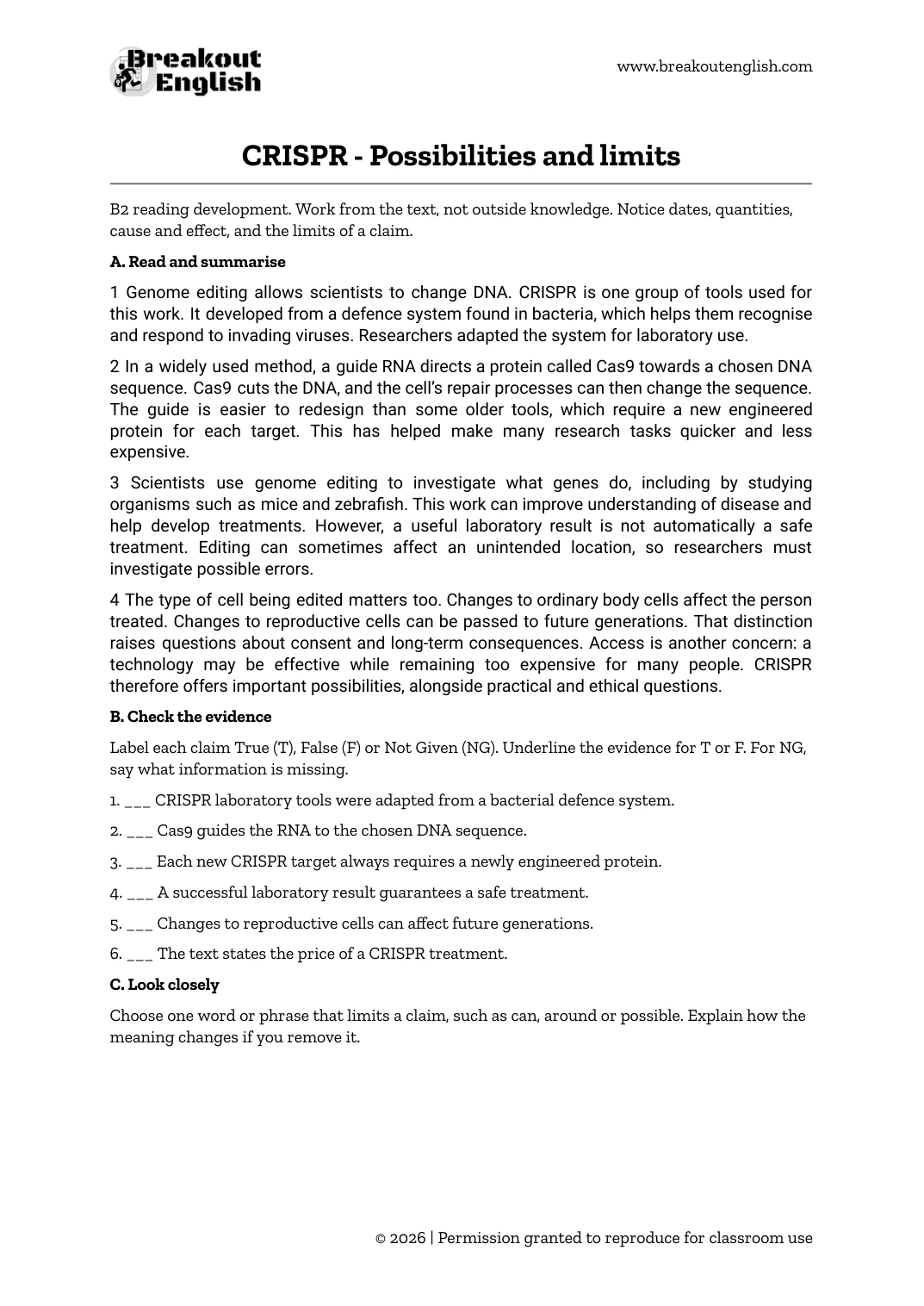
Finding an answer in a reading text is one thing. Explaining why it’s right can be a bit trickier. These B2 reading comprehension activities use texts about Stonehenge, CRISPR and Kandinsky to get your students checking the evidence and talking through their answers.

Contents
Using these B2 reading comprehension activities
“It says it in paragraph three” isn’t quite enough. Ask students to show you which words support their answer and explain the connection. Finding the right paragraph is a start, but a small detail can change the meaning completely.
Students read a short text and classify six statements:
- True: The text supports the statement.
- False: The text contradicts the statement.
- Not Given: The text doesn’t provide enough information to decide.
Get students to compare answers before checking together. When they disagree, ask them to make their case using the text.
False or Not Given?
This distinction often causes problems. Not finding something in the text doesn’t automatically make it false.
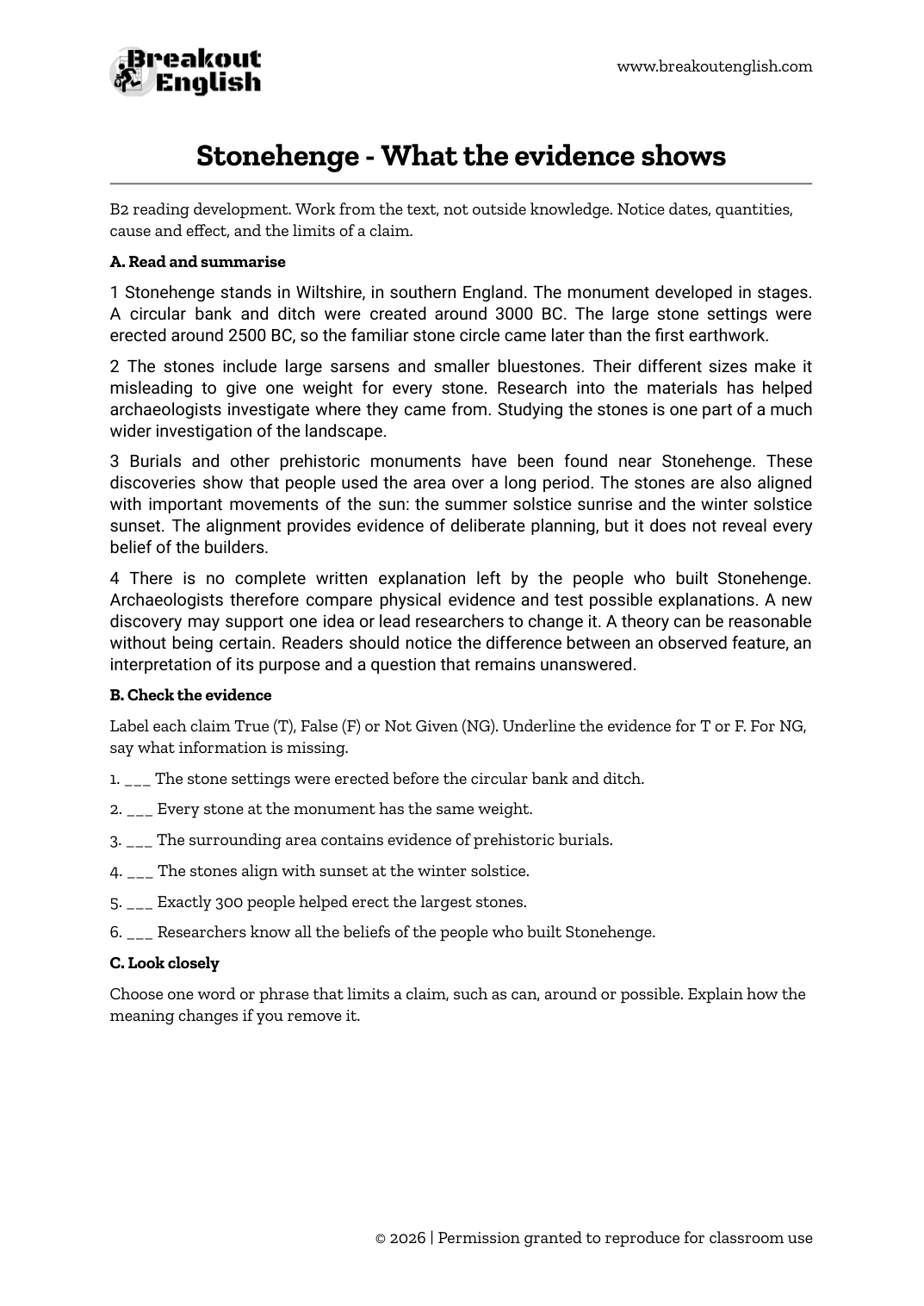
In the Stonehenge text, the bank and ditch date from around 3000 BC, while the stone settings came around 2500 BC. Compare these statements:
| Statement | Answer and reason |
|---|---|
| The bank and ditch came before the stone settings. | True. The dates establish that order. |
| The stone settings came before the bank and ditch. | False. The text gives the opposite order. |
| Exactly 300 people helped erect the largest stones. | Not Given. The text gives no workforce total. |
For a “Not Given” answer, ask students what information they would need. Here, they’d need the number of people involved. Knowing when the stones went up won’t tell us how many people put them there.
The materials
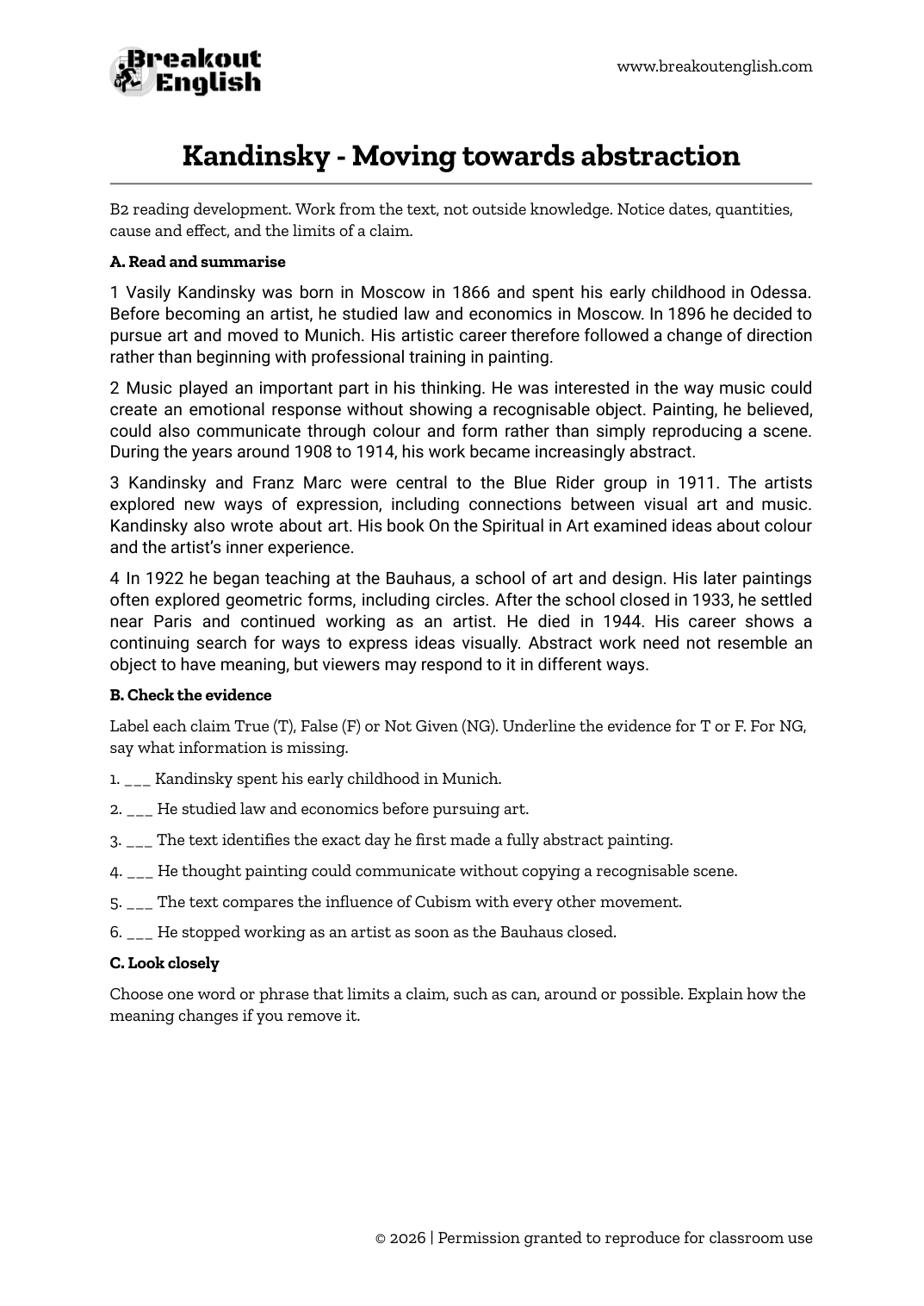
Choose from three texts covering history, science and art. After checking the statements, students examine how a word such as can, around or possible limits a claim. Removing one small word can turn a cautious explanation into a very confident claim.
Each lesson also includes a multiple-choice follow-up. Ask students to explain why the wrong options fail, as well as choosing the right one. This question shares a page with the answer key, so display it with the answers covered.
SKILLS: Reading for evidence, distinguishing False from Not Given and evaluating distractors
LEVEL: B2
TOPIC: Stonehenge, CRISPR and Kandinsky
PREPARATION: Choose a text and print the student worksheet; display the follow-up question with the answer key covered
Download
Preview
For exam practice, try our B2 First Reading Part 5 activities.
